
Environmental Impacts of Data Centers
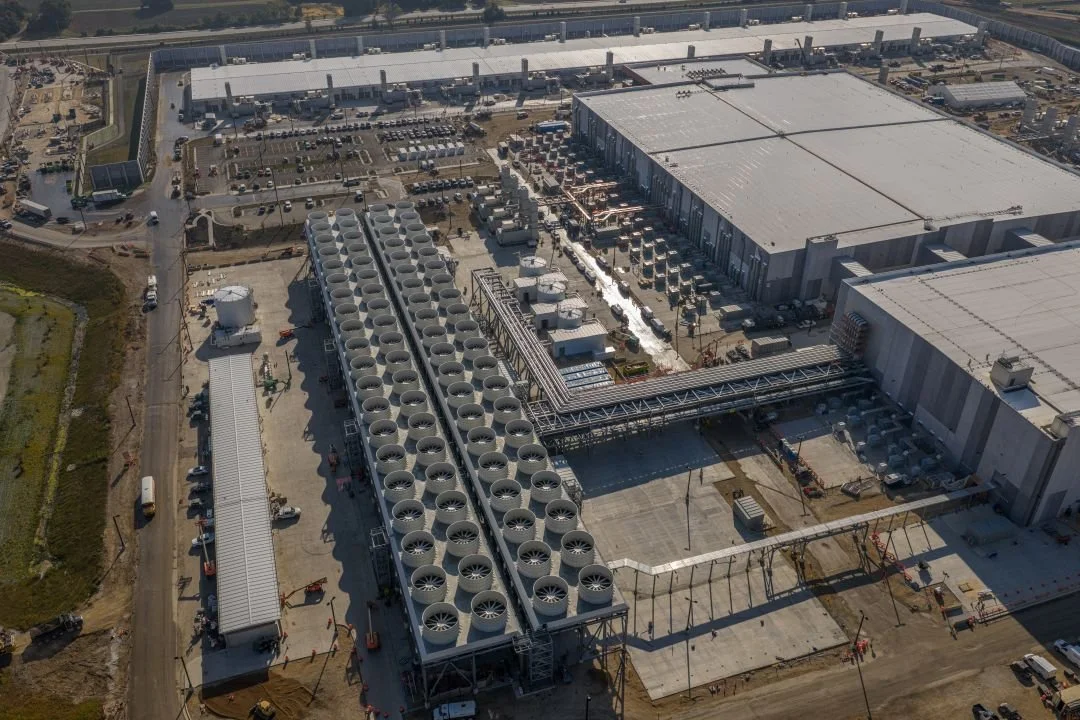
Aerial view of Microsoft’s new AI datacenter campus in Mt Pleasant, Wisconsin. Image from a Microsoft blog post.
As data centers rapidly expand across Wisconsin, communities are grappling with unanswered questions about their true economic benefits, environmental impacts, and the lack of transparency created by non-disclosure agreements. Concerns include long-term jobs versus short-term construction work, heavy demands on water and electricity, rising energy costs, noise and light pollution, and ecological degradation.
This virtual forum is co-sponsored by the LWV of the Lacrosse Area and LWV Dane County as a statewide League event.
Program Information:
With the dramatic increase of AI applications, cloud services, and crypto-mining, data centers are proliferating across the country (and world), and Wisconsin is not immune. Data centers promise to be a boon to local economies, including employment opportunities and large increases in local tax revenues. And yet there are questions. What we do know from locations that now have data centers is that a number of concerns should be addressed sooner rather than later. The questions include whether there will be long-term employment opportunities vs near-term construction jobs, demand on local water resources ,and the impact on local electrical capacity. Local revenues are also questionable at this point since current locations with data centers have not recouped the promised resources. Other concerns, such as noise and light pollution, increased electrical bills, and ecological degradation have been pushed into the background
There are worrisome examples in Wisconsin. In an analysis released in September, Clean Wisconsin found that “two data centers approved for construction in Ozaukee and Racine counties will consume enough energy to power 4.3 million homes - nearly double the 2.8 million housing units in the state”. A Microsoft data warehouse scheduled to open next year is located at the intended Foxconn site and “was already at the center of a controversial plan to divert 7 million gallons of water per day from Lake Michigan.”
According to a report from the Alliance of the Great Lakes States, no state in the region has the legal authority to halt or curb ground water use before detrimental impacts actually occur. The report explores the challenges facing Great Lakes’ water use, it also offers a suite of potential solutions.
The 2023 Wisconsin state budget established broad sales and use tax exemptions to attract certified data centers that include land, equipment and electricity exemptions. Additionally, in an executive order last January, President Trump encouraged a loosening of ecomomic and environmental regulations to pave the way for hyper-scale (major cloud service providers that can house over 5000 servers) data centers—major cloud service providers that can house over 5000 servers. A more recent executive order “seeks to limit the ability of states to regulate artificial intelligence, while attempting to thwart some existing state laws.”
A September 2025 WPR article, one of several in recent months, noted that concerned citizens were raising the alarm and criticizing the non-disclosure agreement (NDA) over a proposed $1.6B data center in Menomonie for which the City Council has already annexed and rezoned around 300 acres of farmland. The city estimates that the data center would use about 75,000 gallons of water per day. Data centers typically feature NDAs that may obscure energy and water designs and usage. A 2025 report by the Wisconsin Chapter of the Sierra club, Midwest Environmental Advocates, Healthy Climate Wisconsin and Wisconsin’s Greenfire, Big Tech Unchecked - a toolkit for community action, noted that “Researchers in Virginia found that at least 80% of local governments that approved or were considering data center projects had signed NDAs with the companies involved.” This means that a lot of negotiations and information are out of local community hands.
Speakers:

Amy Barrilleaux oversees Clean Wisconsin’s external communication strategy, including media relations, public affairs, content marketing, digital advertising and social media. She also hosts Clean Wisconsin’s State of Change podcast. Amy has worked as an award-winning journalist in television, print, radio news, and she leans on that vital storytelling experience every day.

Michael Grief is a Legal Fellow at Midwest Environmental Advocates, where his work has focused on legal pathways to safeguard Wisconsin’s air, water, and climate. Michael is a graduate of the University of California, Berkeley School of Law and lives in Madison.

Gretchen Sabel spent 35 years working in environmental programs for the State of Minnesota, retiring in 2014, when she was able to find her second career with the League of Women Voters. She became the first Chair of LWV Upper Mississippi River Region when it was formed in 2015, and has served on the Board since that time. Her current role with UMRR is as Communications Director, where she manages the website, writes blog posts and sends out a monthly newsletter. As well, Gretchen is President of her local League (LWV ABC in Minnesota).